Make 3rd Grade Math Warm-ups Easy with These 4 Steps
If you’ve ever wanted to use number talks but weren’t exactly sure how to fit them into your math block, you’re not alone. One of the questions I hear teachers ask most often is, “What does a number talk actually look like?”
The good news is that it doesn’t have to be complicated.
In my classroom, number talks take about 5-10 minutes and have become one of the most valuable parts of our math routine. They help students build number sense, practice mental math, explain their thinking, and learn new strategies from their classmates.
Here are 4 steps I use during my number talks each day:
Step 1: Display a prompt on the board
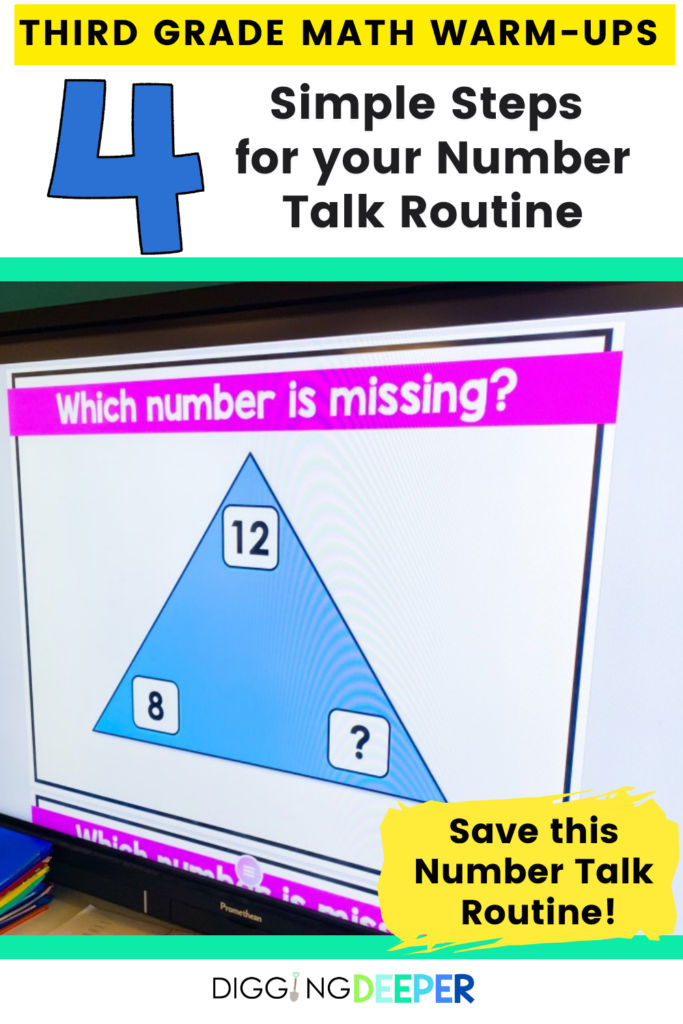
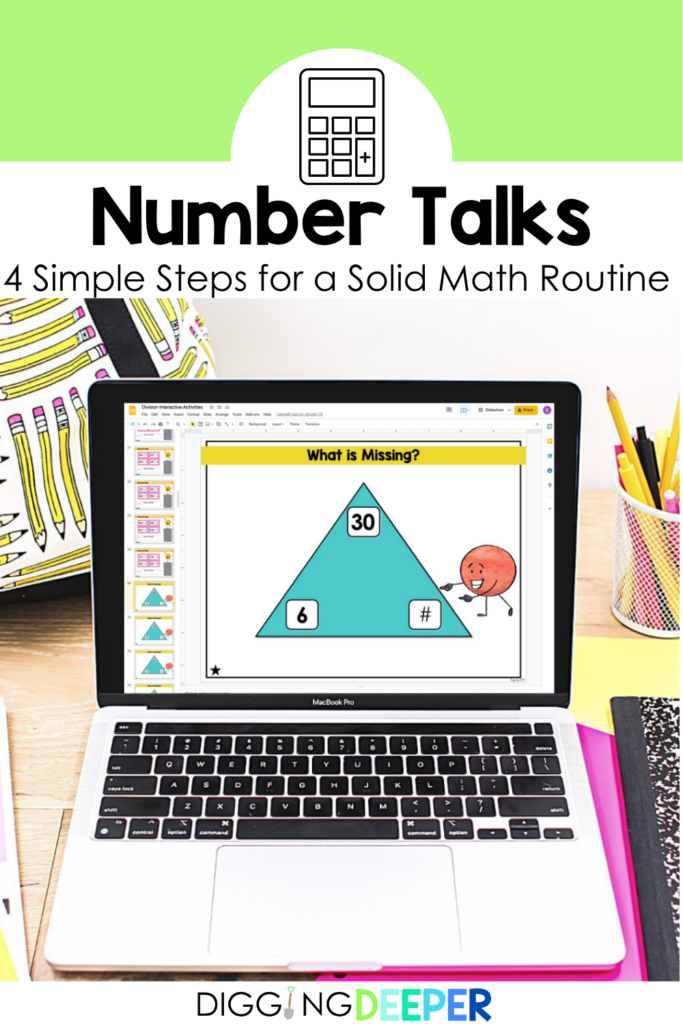
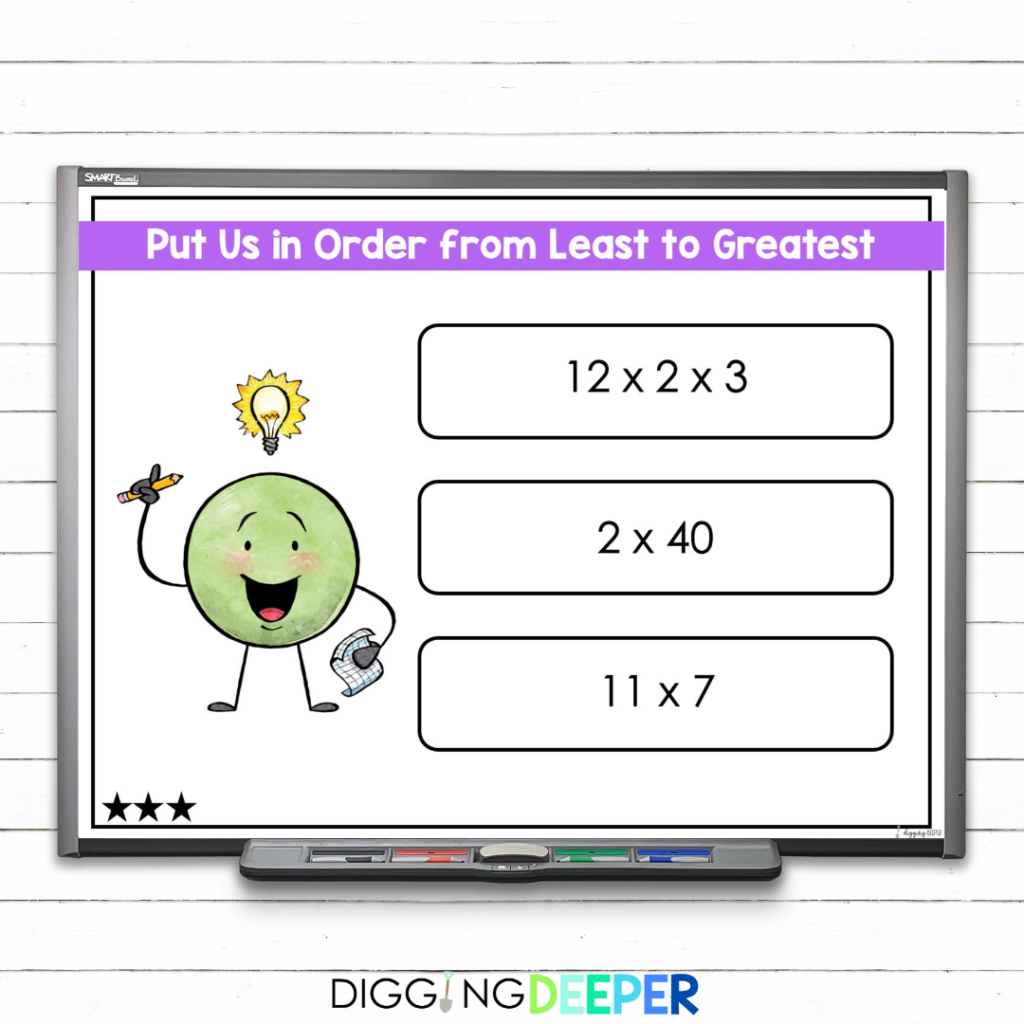
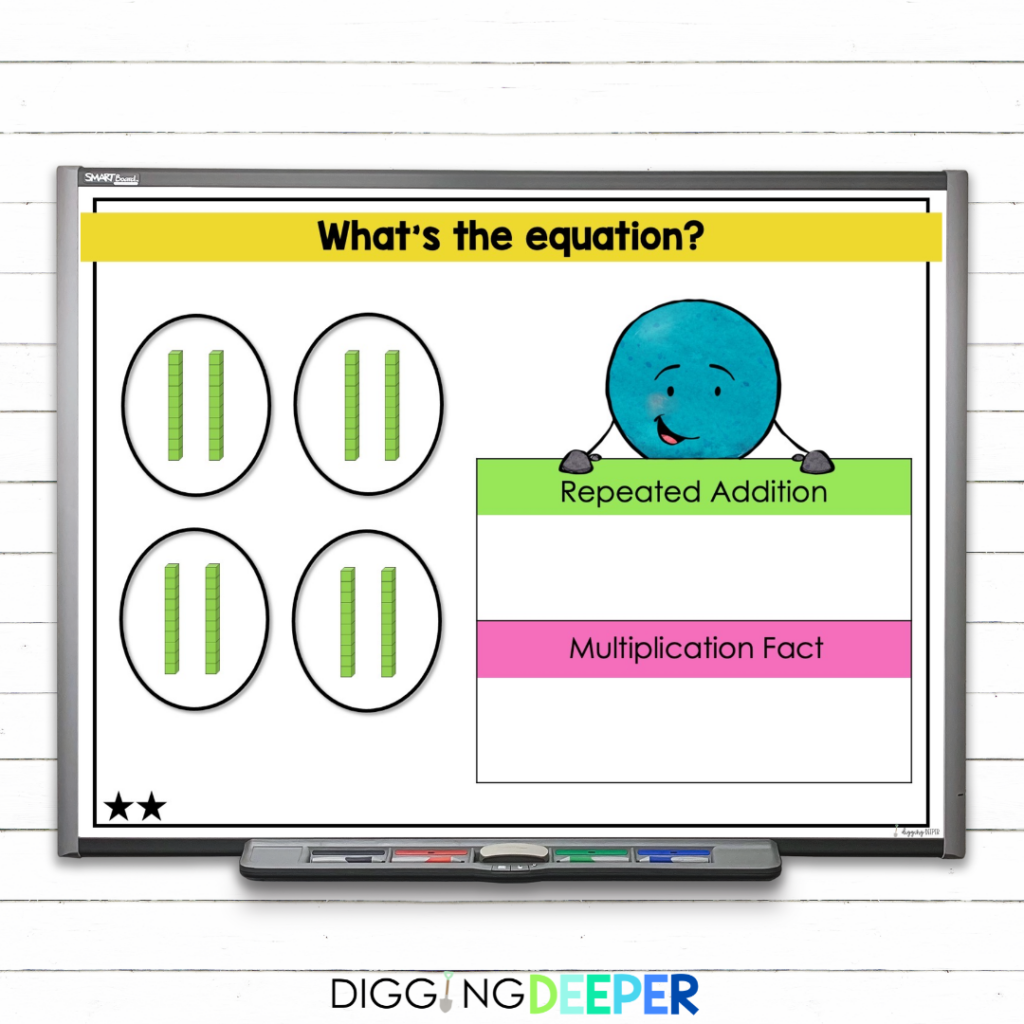
I begin by projecting the day’s Number Talk slide on my classroom board.
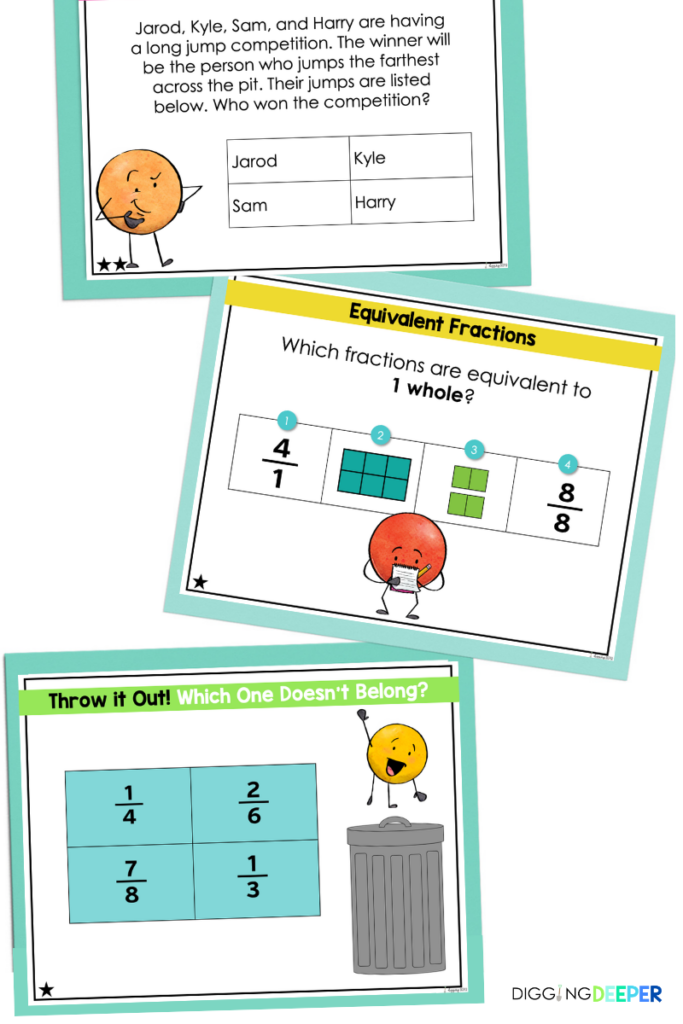
I use these digital number talk slides. Each slide includes one carefully designed math problem that focuses on an important third-grade math concept. Throughout the year, students practice skills like place value, addition/subtraction, fractions, measurement, etc.
Because there is only one problem on the screen, students focus their attention on the math instead of feeling overwhelmed by a worksheet full of questions.

Step 2: Give students thinking time
This step is the most important. Resist the urge to allow students to raise their hands and immediately answer.
Once the problem is displayed, everyone has time to think quietly.
Students can either solve the problem mentally or use pencil/paper or whiteboards to show their work. I alternate with this in my own classroom, depending on the problem type. Mostly, I lean towards letting them show their work. We use a lot of personal whiteboards or dry-erase markers on the desks.
There are many strategies students can use with each activity. The goal isn’t to find one “right” strategy. The goal is for every student to develop a strategy they understand and can explain.
Step 3: Share, compare, and defend thinking
This is where the real learning happens.
After students have had enough think time, I invite volunteers to share how they solved the problem.
Students quickly realize that there is often more than one correct way to solve a problem. Listening to classmates explain their thinking exposes them to new strategies they may not have considered before.
These conversations build mathematical confidence while strengthening students’ reasoning and communication skills.
Step 4: Connect the discussion to your math lesson
After we’ve explored several strategies, I intentionally connect the conversation to the math skill we’re currently learning or reviewing.
This final step helps students see that the number talks aren’t separate from the math curriculum. They strengthen the exact concepts we will use during today’s lesson.
Why this routine works
This simple routine creates a classroom where students feel comfortable taking risks, explaining their thinking, and learning from one another.
Instead of memorizing procedures, students develop a deeper understanding of how numbers work.
Over time, I have noticed my students become
- more confident mathematicians
- stronger problem solvers
- better mathematical communicators
- more willing to try multiple strategies
- more engaged during math instruction
The best part? This routine fits into just a few minutes each day while making a lasting impact on students’ mathematical thinking.
Ready to try number talks?
If you’re looking for a simple way to build number sense and spark meaningful math discussions, my Digital Number Talks for Third Grade are designed to make implementation easy.
Just display a slide, give students time to think, facilitate the discussion, and connect it to your lesson. Your daily math routine is ready to go.